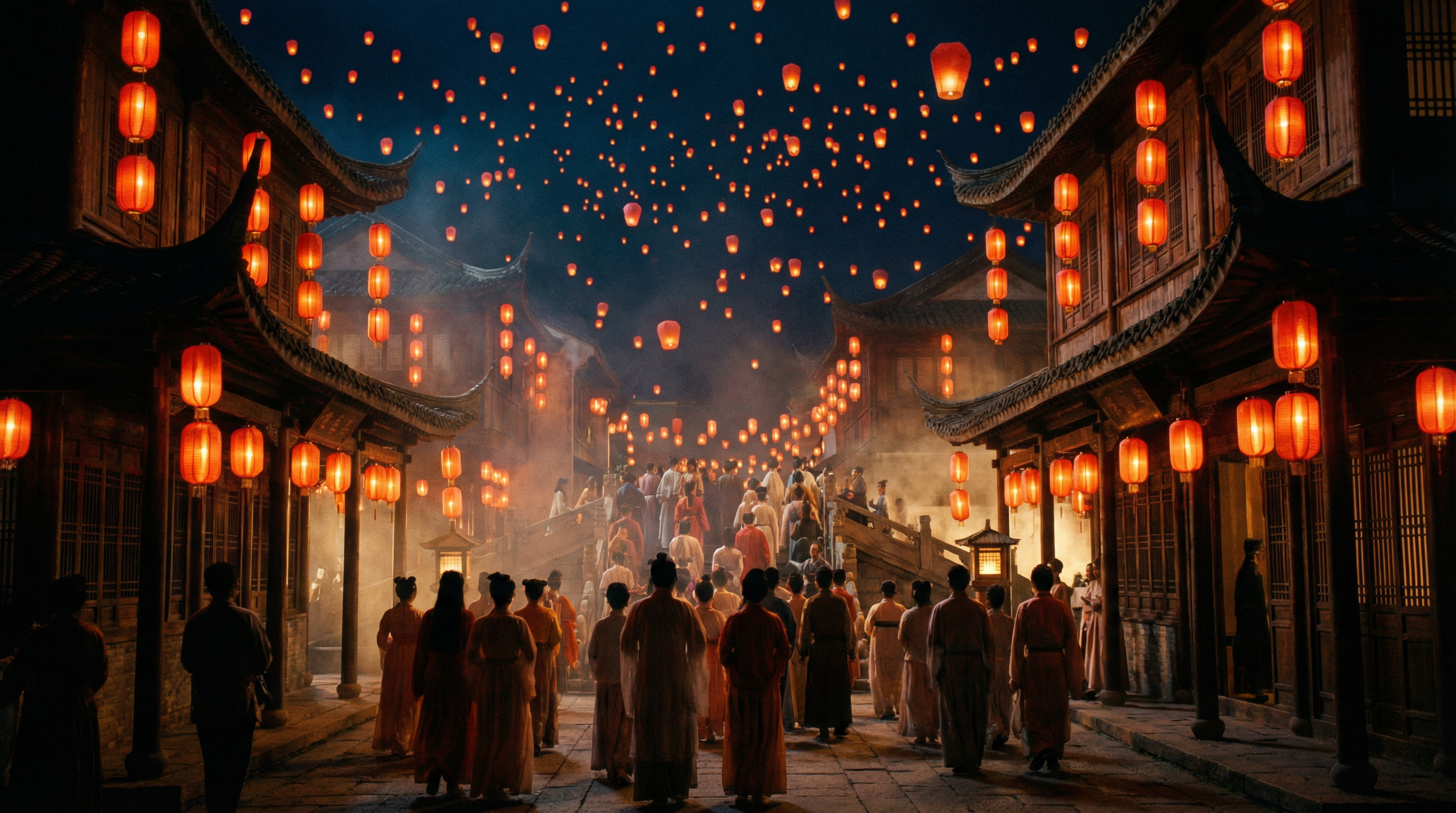
Visual Expression
From Text to Screen | 從文字到影像
"The camera is an instrument that teaches people how to see without a camera."
Welcome to the digital companion for our workshop. Here, you will explore how the ancient art of Chinese poetry shares a common language with modern cinematography. Through the lens, we translate words into images, and feelings into frames.
The Camera's Eye
Select a lens to see how focal length changes the storytelling of the scene.
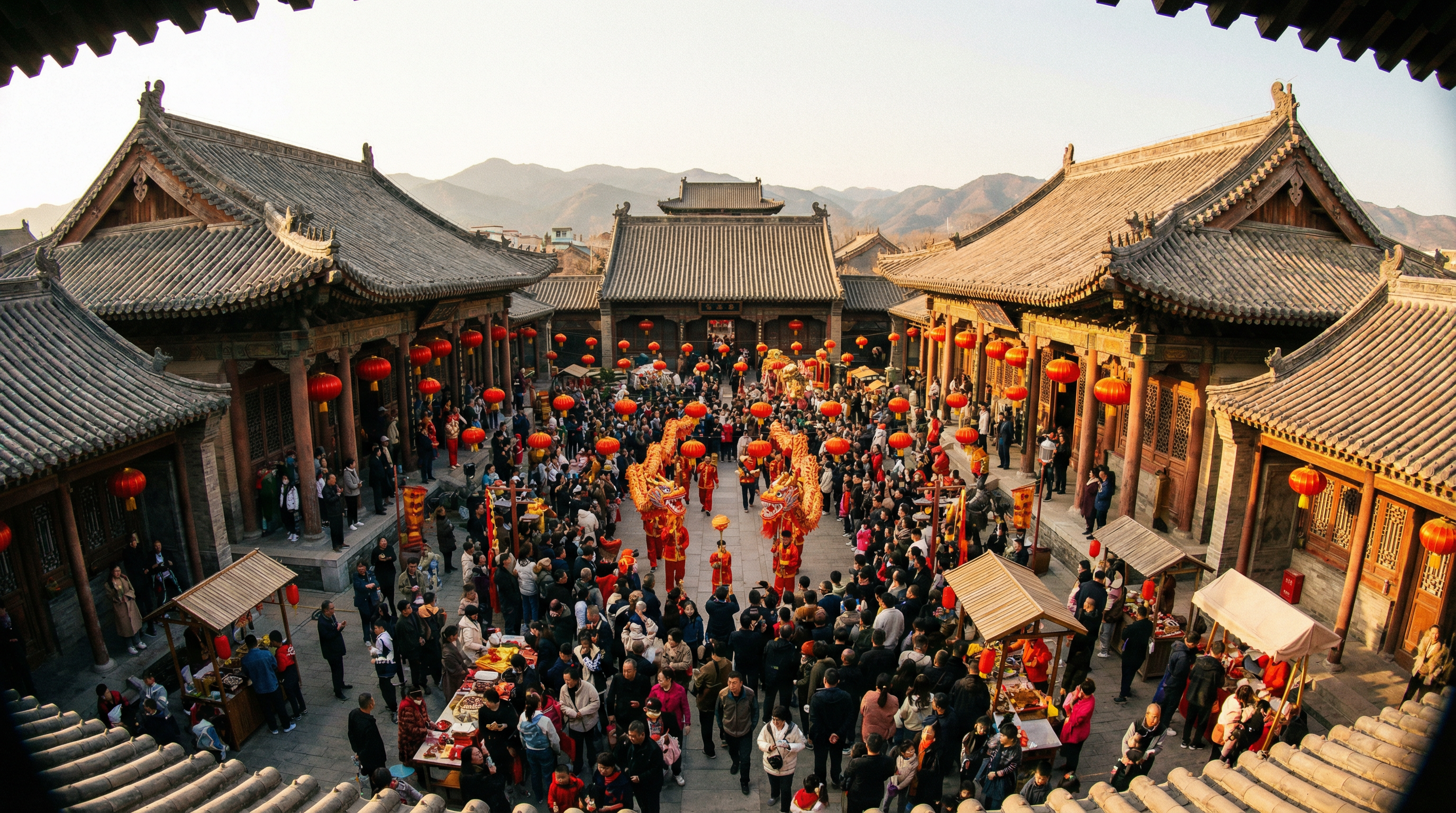
Select Lens
Analysis
Deconstructing the Poem
See how Xin Qiji's "Jade Terrace, Lantern Festival" can be translated into a shot list.
Establishes the grand scale of the festival. The 'thousand trees' (lanterns) suggests a vast, panoramic view.
東風夜放花千樹
One night's east wind adorns a thousand trees with flowers.
Focuses on the detail of falling fireworks/lanterns. The imagery of 'rain' suggests movement and density.
更吹落、星如雨
And blows down stars in showers.
Observes the activity of the crowd. We see the subjects (horses, carriages) in their environment.
寶馬雕車香滿路
Fine horses and carved carriages spread fragrance en route.
A rapid succession of sensory details—sound, light, and motion. This creates a montage effect.
鳳簫聲動,玉壺光轉,一夜魚龍舞
Phoenix flutes sound, jade pot turns, all night fish and dragon lanterns dance.
Director's Challenge
Test your skills. Read the line, visualize the scene, and call the shot.
東風夜放花千樹
"One night's east wind adorns a thousand trees with flowers."
Not quite.
Correct! 'Thousand trees' implies a vast scale. A Wide Shot establishes the grand atmosphere of the festival.